Regenerative Agriculture in Action with Bonduelle and Vivescia
30th June 2025
SAI Platform Annual Event 2025

Across two farms in northern France, Bonduelle and Vivescia brought regenerative agriculture to life, offered tangible insights into how incremental change, collaboration, and innovation are transforming farm systems and leading to lasting impact.
- At EARL des Peupliers, crop diversity and strong partnerships are improving soil health and keeping farms profitable.
- Vivescia’s pilot farmer is testing no-till methods, cover crops, and precision tools to make regeneration work in real time.
- Both farms prove that big change starts small and that with the right support, farmers are ready to lead.
Bonduelle Field Visit: Regeneration Through Diversification and Collaboration
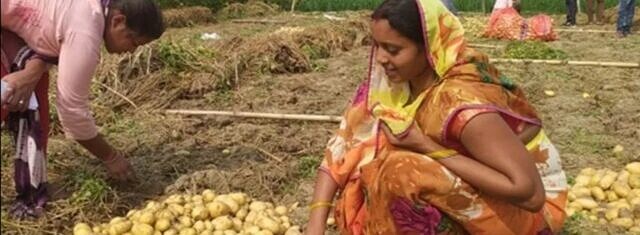
The day began at EARL des Peupliers, where producer Olivier Deneufbourg introduced participants to the realities of managing a diversified vegetable farm committed to environmental and economic sustainability.
Olivier outlined the farm’s long-standing efforts to reduce environmental impact while maintaining profitability. Particular focus was placed on reversing the decline in soil organic matter, combining crop rotation strategies and regenerative soil practices designed to build long-term health.
The visit also highlighted the power of collective action. Participants learned about the ARA-Blé Project, an initiative co-developed with the Valfrance cooperative and supported by McDonald’s and Bimbo, aimed at improving sustainability across wheat and vegetable farming systems. Additional presentations from OPLVERT and Unilet emphasised the importance of ongoing technical support and collaboration to ensure regenerative efforts are both consistent and scalable.
Bonduelle also shared insights into upcoming initiatives with Icosystème and AgroParisTech, underlining the company’s commitment to supporting farmers through knowledge sharing and innovation.
At its heart, EARL des Peupliers demonstrated how incremental change, supported by partnerships and technical expertise, can deliver meaningful progress on both environmental and economic fronts.
Vivescia Field Visit: Trial, Technology, and Transition
The afternoon took participants to Villers-Sous-Chatillon, where they visited the farm of Stéphane Schumacher, a member of the Vivescia cooperative and a front-runner in regenerative transition.
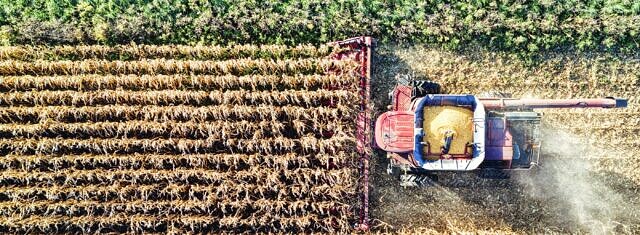
Stéphane is one year into Vivescia’s Transition Programme, and his farm reflects a bold yet practical commitment to change. With a no-till approach, extensive cover cropping, and a diversified crop rotation that includes wheat, barley, soybean, rapeseed, and miscanthus, his system is designed for soil health, carbon capture, and long-term resilience.
What stood out to participants was Stéphane’s embrace of technology: he uses two satellite-based decision support tools to optimise nitrogen fertilisation for wheat and rapeseed, an example of how data and digital tools can help de-risk the transition to regenerative practices.
Stéphane’s farm is also an emerging pilot case for SAI Platform’s Regenerating Together Framework, showing strong alignment between the practical implementation of regenerative agriculture and the framework’s principles.
A Shared Message: Small Steps, Big Impact
Together, these field visits illustrated two powerful truths: long-term commitment and learning from failure are both essential in scaling regenerative agriculture. While the farms differed in context and approach, both showed that real progress lies in testing, adapting, and building confidence over time.
Crucially, the visits reinforced that farmers are ready to lead, when supported with the right tools, incentives, and collaborative networks. As the industry looks ahead, these stories provide a roadmap for moving from isolated success to system-wide change.